

The beef gets the headline. The toppings decide whether the last bite is as good as the first.
A Clyde Burger begins with two half-pound grass-fed beef patties. Six slices of cheese, lettuce, tomato and jalapeños have to work around that substantial center: enough melt to coat it, enough crunch to break up the richness, and enough heat to make the next bite interesting.
That balance is built at the prep station. Wet lettuce, a tired tomato or a mound of undrained peppers can undo a carefully cooked burger in seconds.
Burger Lab development note: The six-slice cheese count is established. Cheese varieties, slice weights and produce portions remain choices to approve through product trials; the methods below are proposed kitchen practices, not a validated service procedure.
01 / THE MELT
Six slices. Three on each patty.
The Clyde build calls for six slices of cheese, divided evenly between the two patties. Six slices does not require six different varieties. The finished selection should taste deliberate and melt on schedule, with a defined slice weight and thickness.
Start with a dependable melting cheese, then test what the other slices contribute. A sharper flavor, a little stretch or a contrasting white-and-yellow combination can each have a place. Every addition should improve the finished burger rather than compete with it.
Choose for the hot bite
Compare candidates on the same approved beef patty, at the same slice weight and cooking endpoint. Look for even coverage, a tender bite and flavor that still leaves room for the beef.
Write down the portion
Record the product, slice dimensions, weight and stacking order. A supplier change that doubles slice thickness also changes the amount of cheese and the time needed to soften it.
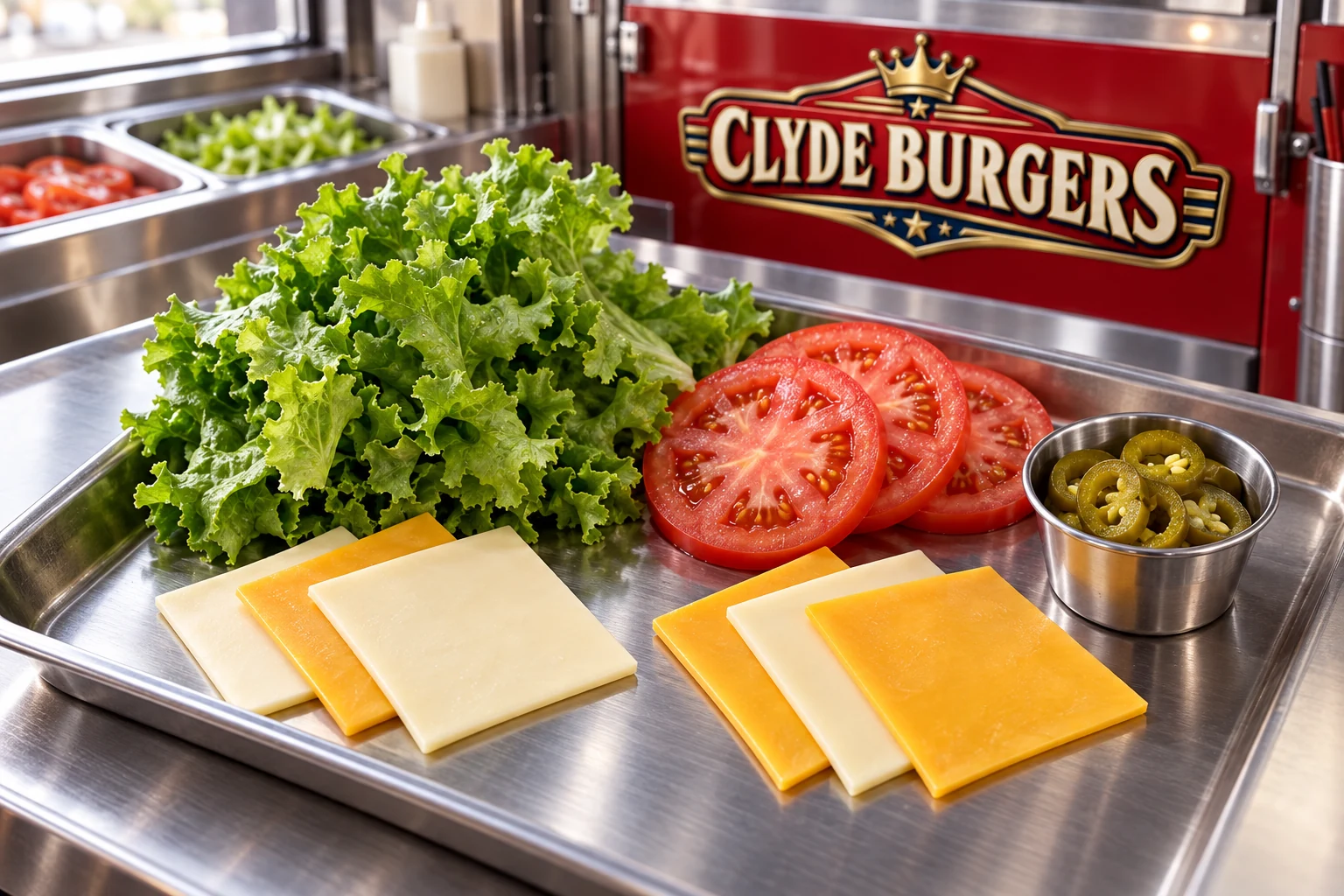
The white and yellow slices in the concept image illustrate the visual direction; they do not identify a finalized proprietary cheese blend.
02 / TIMING THE FINISH
Melt the cheese where the heat is.
Stage two groups of three slices for each ticket, keeping them refrigerated until needed. Add one group to each patty near the end of the cook, using the approved sequence and a clean melting cover when appropriate for the equipment.
Spread the slices to cover the patty instead of building a tall pile in its center. Watch the edges soften and settle. The goal is a cohesive layer that follows the beef, without cold corners, a stiff center or a pool of separated oil.
Test the finish as part of the full cooking sequence. Cheese should not become an excuse to leave the beef on the griddle indefinitely. Confirm the beef’s safe endpoint with a thermometer, then assemble promptly using the step-by-step Clyde Burger method.
03 / THE CRUNCH
Lettuce should arrive cold, crisp and dry.
Lettuce gives a rich burger a clean break. Choose leaves that hold their shape and provide a distinct crunch without forcing the guest through a thick, awkward rib. Trim and portion for the bun rather than using a whole leaf simply because it came that way.
After washing where required, dry the leaves thoroughly with suitable clean equipment or food-safe towels. Water clinging to the folds belongs in the prep sink, not inside the burger. Keep portions loose enough to protect their texture; a tightly compressed pan is a poor place to preserve crispness.
Work from small refrigerated batches. Refill the line from covered back-stock and replace tired portions under the kitchen’s quality and discard procedure. Wilted edges and water collecting in the pan are problems to correct before the next ticket.
04 / THE FRESHNESS
Ripe enough for flavor. Firm enough for the stack.
A tomato should contribute sweetness, acidity and a juicy bite. Pale, hard slices add bulk with little payoff; collapsing slices make a one-pound double harder to hold together. Check flavor as well as appearance when approving a supplier or a new delivery.
Choose sound tomatoes that cut cleanly. Use a clean, sharp knife or approved slicer and a consistent thickness. During development, compare a few thicknesses on the actual bun, then record the winning slice count and portion weight.
Let excess cutting juice drain in a suitable food-safe container before assembly. Keep prepared slices refrigerated and protected. Arrange them as one controlled layer rather than a slippery tower; enough coverage to taste tomato in the bite is more useful than an impressive pile.
05 / THE HEAT
Jalapeños should reach more than one bite.
A good jalapeño portion brings a clear pepper note and a measured kick. Scatter slices across the topping layer so the heat is distributed, rather than hiding the entire portion in the middle of the burger.
Pickled: bright and tangy
Pickled rings are the working option illustrated here. Approve the product for flavor, heat and texture, then drain each working portion with a dedicated utensil. Add peppers to the burger, not a spoonful of brine.
Fresh: a different choice
Fresh jalapeños bring a crisper texture and a different flavor. Treat them as a separate development option with their own preparation and portion specification, not an interchangeable substitute for pickled rings.
Heat can vary between products and batches. A designated tasting during product checks helps keep the portion consistent with the intended burger. Keep pepper utensils separate and make “no jalapeños” clear on the ticket before assembly begins.
Final pepper product and portion are development choices. Follow the selected product’s storage directions and the kitchen’s approved handling procedure.
06 / THE PREP STATION
Keep the cold side ready for the hot side.
Set the station in the order the assembler uses it: covered cheese, prepared lettuce, tomato and drained jalapeños, with dedicated clean utensils and a clear space for the bun. Keep raw-beef and shell-egg work away from this ready-to-eat area.
FDA recommends refrigerated storage at 40°F or below for perishable produce such as lettuce, and refrigeration for pre-cut produce. Wash produce under running water before preparation; do not use soap. Produce labeled pre-washed and ready-to-eat can be used without another wash. Keep clean produce and its tools separate from raw meat.
Label working containers, maintain the approved cold-holding conditions and replenish in small quantities. Do not keep topping up an old pan until its batch history disappears. Clean and sanitize equipment according to the kitchen’s procedure.
Source: FDA: Selecting and Serving Produce Safely. Apply the actual truck’s approved food-safety plan and local requirements.
07 / THE HANDOFF
Build for the bite, then send it.
Complete the cheese finish at the griddle. At the clean pass, add the prepared produce and drained peppers in the approved build order, keeping the layers centered and the portion even. Follow the Clyde Burger assembly guide for the complete bun, sauce, beef and egg sequence.
Before closing the bun
- Six slices accounted for, split three and three.
- Lettuce crisp, dry and portioned to the bun.
- Tomato in an even layer, without pooled juice.
- Jalapeños drained, distributed and matched to the ticket.
At the pass
Check the special-order notes before the burger leaves. Cold toppings should meet the hot stack at assembly, not sit on it while the rest of the order catches up. Package promptly and hand off while the contrast between hot beef and fresh toppings still matters.
08 / THE FINAL WORD
And then there is Clyde Sauce.
Cheese brings the melt. Lettuce brings the crunch. Tomato brings the freshness. Jalapeños bring the heat.
Clyde Sauce brings a much shorter conversation.